
Pioneering PGR biostimulant development for sustainable agriculture
Growth and development of plants is a natural process which depends on adequate nutrients, water, atmospheric CO₂ and plenty of sunshine. Environmental factors such as temperature and favorable soil conditions determine quantitative plant growth and productivity.
To feed an ever-growing world population, an increase in plant productivity can be achieved by measures such as optimal fertilization and irrigation, use of high-yielding crop varieties, proper soil conditions, and reduction of pests, diseases, and weeds. An additional boost in productivity can be achieved by using plant growth regulators (PGRs).
Plant growth regulators and biostimulants are natural (phytohormones) or synthetic chemical molecules which are able to influence plant growth and are used in relatively low concentrations without any toxic effect on target plants.
Homeostasis is the process where a sensitive and active balance of all hormones is favorably maintained at a particular developmental event. Secondary metabolism is essential to plant functions, regulations, and survival — it is involved in plant defense and stress reactions to hostile environments.
Plant phenolics, derived from phenyl propanoid and tryptophan pathways, are responsible for maintaining hormonal balance in the plant growth cycle. Certain plant phenolics are involved in regulating endogenous hormones through increased or decreased biosynthesis control of metabolism and their conjugation/deconjugation with amino acids and simple sugars.
With this in mind, Jaynin has developed third and fourth generation unique formulations including Malvinol, which is capable of increasing growth and productivity (harvest index) of almost all crop plants at all stages of the crop cycle.
One major area of crop vigor and harvest index that has been comparatively neglected is maximizing the role of the plant root system in resource (water & nutrients) capture, sensing, and adjusting to environmental stresses. Only recently has the scientific community recognized the importance of manipulating plant root systems to produce improved, significant, and sustainable elevated yields.
Aerial plants extend into the rhizosphere (soil) as roots, responsible for accessing minerals and water. The rhizosphere is a biological hot spot where microorganisms play major roles in plant resource capture and in ameliorating plant stress tolerance.
While Malvinol is developed to improve shoot resource efficiency in the phylloplane (above-ground resources like sunshine, CO₂), Lycosin is the medium which optimizes rhizosphere resource capture through favorable root architecture, auxin-cytokinin interactions, efficient root meristem cell division, and extensive root networks.
Plant growth development and productivity is under the control of endogenous hormones like auxins, gibberellins and other secondary regulators like phenolics. Hormone-sugar complexes are dissociated by Malvinol, and active hormones are released to influence biological roles. For the last three decades, Jaynin Crop Sciences has been closely associated with innovative R&D in this area.

Malvinol optimizes plant vigor without compromising yield potential, proven particularly effective for cotton, soybean, and many commercial crops.
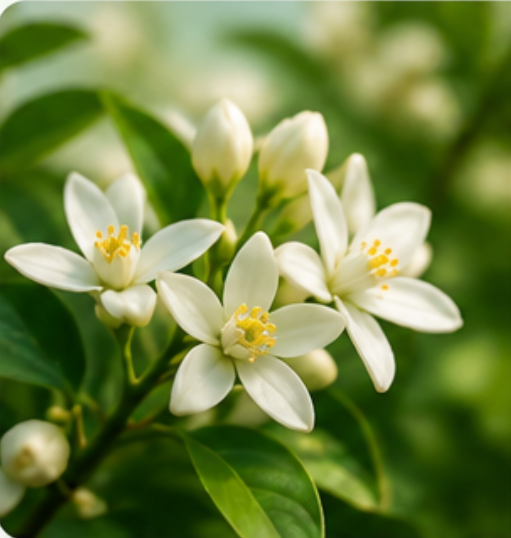
Enhances flower induction, bloom, fruit set and development, ripening, and maturity of fruits and seeds across all crop types.

Helps plants withstand adverse field conditions such as water stress, temperature extremes, and salt stress — maintaining yield under unfavorable regimes.

Malvinol, being phenolics-based, can induce disease resistance through Systemic Acquired Resistance (SAR) against a variety of pathogenic microbes.

Application keeps ethylene levels low before ripening, enhancing keeping quality while grain weight and size are significantly improved.
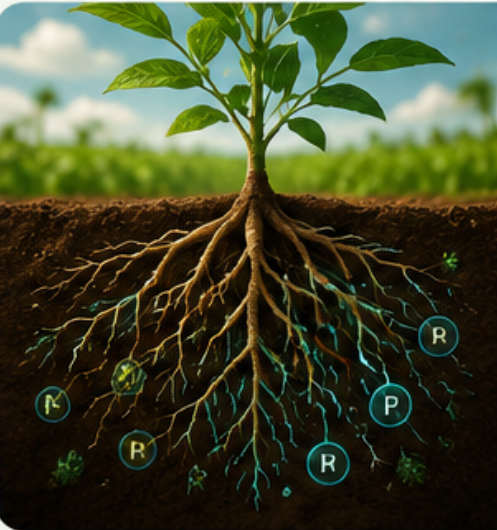
Lycosin-based products create expansive vertical and lateral root networks for optimal absorption of nutrients and water from soil.